
Choosing Darts: Weight, Barrels, Shafts and Flights
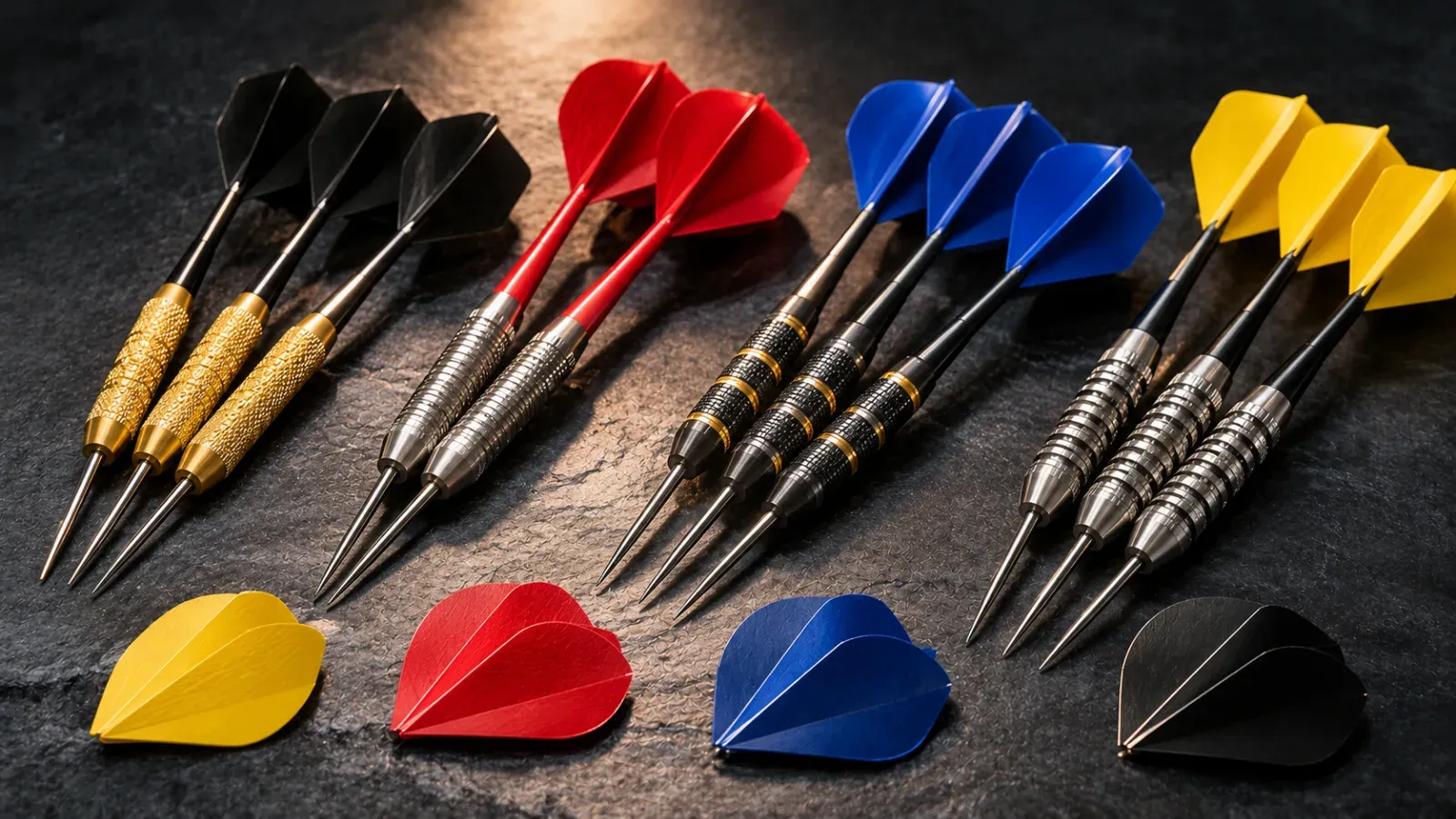
There is no single best set of darts. The right darts depend on your grip, your throw and personal preference. This guide explains the main choices so you can find a set that feels right.
The parts of a dart
A steel-tip dart has four parts:
- Point: the steel tip that sticks in the board.
- Barrel: the part you grip, which carries most of the weight.
- Shaft: the stem that connects the barrel to the flight.
- Flight: the wings at the back that stabilise the dart in the air.
Material: brass, nickel or tungsten
Cheaper darts are often made of brass, which is relatively light and bulky. Most serious players use tungsten, a very dense metal. A tungsten barrel can be slimmer for the same weight, so darts group more closely together on the board. The tungsten percentage, often 80 to 97 percent, shows how much of the barrel is tungsten.
Weight
Most players use steel-tip darts between about 18 and 26 grams. Lighter darts need a faster, more precise throw. Heavier darts fly more steadily but can feel tiring over a long session. Try different weights before you buy; many players settle somewhere in the low twenties.
Barrel shape and grip
- Straight barrel: a consistent grip position, popular with many players.
- Torpedo barrel: weight towards the front, good for players who grip near the front.
- Grip pattern: rings, knurling or grooves give extra grip. Heavy grip suits dry hands; a smoother barrel suits players who release cleanly.
Shafts and flights
Shafts come in different lengths. Longer shafts suit players whose darts arrive with the tail pointing up; shorter shafts suit a flatter flight. Flights come in shapes such as standard, slim and kite. Larger flights give more stability, smaller ones less drag. Experiment, because small changes make a noticeable difference.
Steel-tip or soft-tip?
Soft-tip darts with plastic points are used on electronic boards and are usually lighter. If you play on a bristle board, choose steel-tip darts.
Once you have your darts, set up your board correctly as described in setting up a dartboard and work on your finishing with our checkout guide.
Frequently asked questions
What weight darts should a beginner use?
Many beginners start with steel-tip darts of around 20 to 24 grams and adjust from there.
Is tungsten better than brass?
For most players, yes. Tungsten allows a slimmer barrel for the same weight, so darts group more closely.
Do flights really make a difference?
Yes. Flight shape and size affect stability and drag. Small changes can noticeably change how your darts fly.
Back to home