
Setting Up a Dartboard at Home
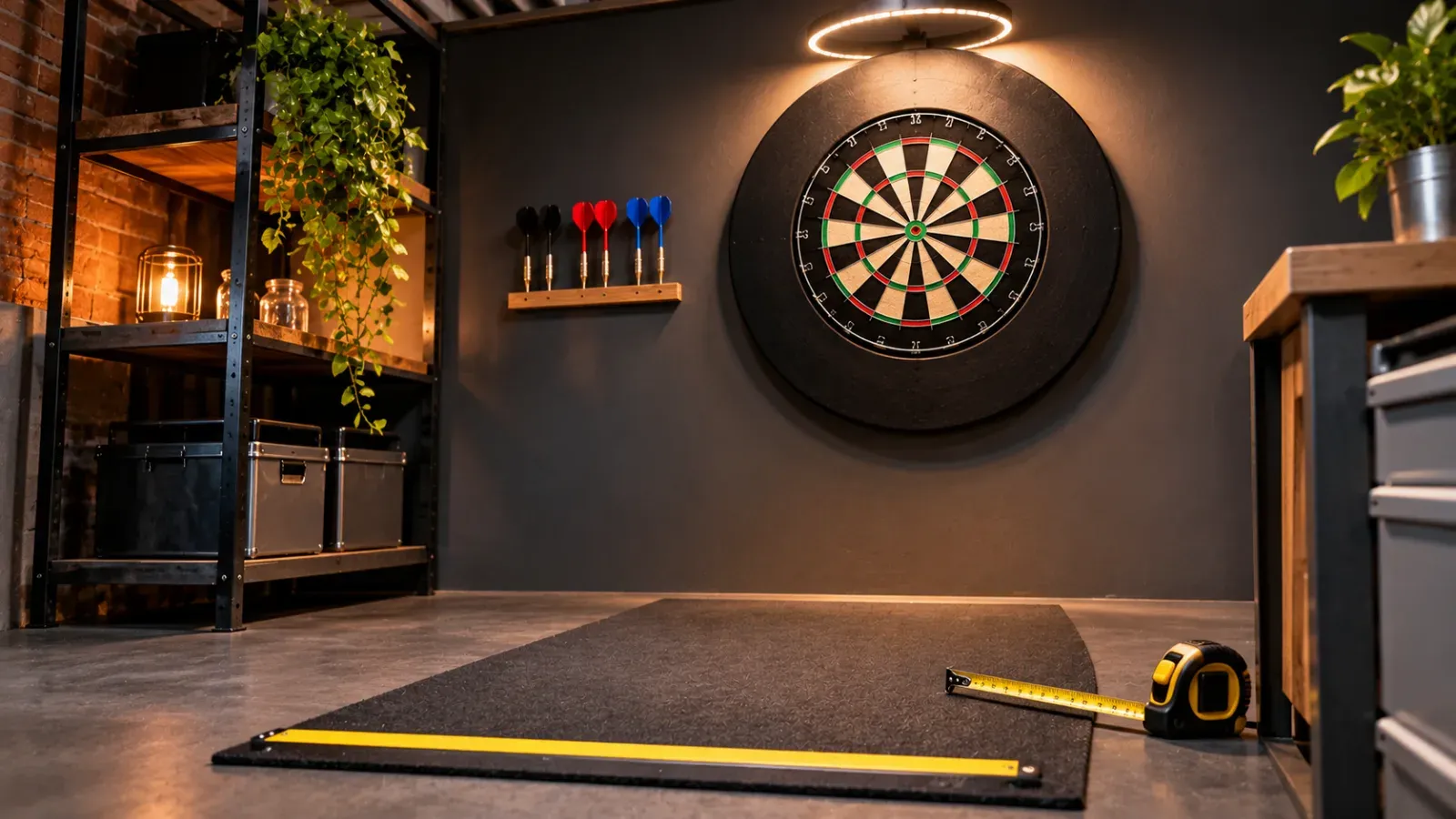
A correctly set up dartboard makes practice more effective and helps you get used to match conditions. Fortunately it is not difficult. This page gives the official measurements for steel-tip darts and practical tips for a home setup.
Official measurements
- Height: the centre of the bullseye is 1.73 metres (5 feet 8 inches) above the floor.
- Throwing distance: the oche, or throw line, is 2.37 metres (7 feet 9.25 inches) from the face of the board, measured horizontally along the floor.
- Diagonal check: the distance from the centre of the bullseye to the back of the oche at floor level should be 2.93 metres.
Measuring the diagonal is a handy way to check that both height and distance are correct.
Hanging the board
Fix the bracket securely to a solid wall and make sure the board hangs level, with the 20 segment at the top in the centre. Most bristle boards can be rotated. Turning the board regularly spreads the wear across the sisal, so the board lasts longer.
Protect your wall and floor
Missed darts will hit the wall. A dartboard surround, a ring around the board, catches most of them. A cabinet or a protective panel works too. A mat on the floor protects both the floor and your dart points, and many mats have the oche marked on them.
Lighting
Shadows on the board make it harder to see where you are aiming. A ring light around the board, or lights placed above and to the sides, gives even lighting without shadows from your darts.
Space
Make sure there is enough room around the throwing area. No one should walk between the oche and the board, and there should be space to retrieve darts safely. A garage, games room or hallway often works well.
Caring for a bristle board
- Do not soak a bristle board in water; it damages the fibres.
- Rotate the board regularly.
- Remove darts by twisting them gently out, rather than pulling straight.
- Keep the board away from direct heat or damp.
With your board ready, choose a set of darts that suits you (choosing darts) and brush up on the rules and scoring.
Correct height and distance
The centre of the bullseye should be 1.73 metres above the floor. For steel-tip darts, the oche is 2.37 metres from the face of the board, measured horizontally along the floor. The diagonal distance from the bullseye to the front of the oche is 2.93 metres, which is a useful check if your floor is uneven. Soft-tip darts use a slightly longer throwing distance, usually 2.44 metres.
Positioning the board
Mount the board so that the 20 segment sits at the top, with the dark segment pointing straight up. Make sure the board is level and firmly fixed; a wobbling board deflects darts and causes bounce-outs. Most boards come with a mounting bracket that screws into the wall, and many can be rotated to spread wear across the segments.
Protecting walls and floors
A surround ring around the board catches stray darts and protects the wall. A dartboard cabinet does the same while also hiding the board when not in use, and often includes a scoreboard. A throw mat on the floor protects both the floor and your dart points and usually has the oche distance marked on it.
Lighting
Even lighting without shadows makes a big difference. Lights placed above or slightly in front of the board work better than a single ceiling light behind the player. LED ring lights that fit around the board are popular because they remove shadows from the darts themselves.
Space around the oche
Leave enough room behind the oche for a natural throwing motion and for players waiting their turn. Around a metre to the side of the board is ideal so that spectators are not in the line of fire. Keep doorways out of the throwing area, so nobody walks in front of the board during a throw.
Board maintenance
Rotate a bristle board regularly so the treble 20 and other popular areas do not wear out too quickly. Remove darts by twisting them gently rather than pulling straight out, which helps the fibres close again. Never soak a bristle board in water; it damages the fibres and shortens its life. A well-maintained board can last for years of regular practice.
Practice setup checklist
- Bullseye at 1.73 metres high.
- Oche at 2.37 metres from the board face.
- 20 segment at the top, board level and secure.
- Surround or cabinet to protect the wall.
- Shadow-free lighting.
- A throw mat or marked line on the floor.
With your board set up correctly, every practice session matches tournament conditions. Next, read up on darts rules and scoring and choose the right equipment in choosing darts.
Electronic boards
If you play soft-tip darts, an electronic board counts the score for you and often includes many game modes. It needs a power supply and a little more space around it for the display. Set it up at the same height, but measure the longer soft-tip throwing distance. The differences between the two formats are worth knowing before you invest in a board at home.
Frequently asked questions
How high should a dartboard be?
The centre of the bullseye should be 1.73 metres above the floor.
How far is the oche from the dartboard?
For steel-tip darts, 2.37 metres measured horizontally from the face of the board.
How do I check my dartboard setup?
Measure the diagonal from the bullseye to the back of the oche at floor level. It should be 2.93 metres.