
A History of the PDC World Darts Championship and Alexandra Palace: From Inception to an Iconic Venue
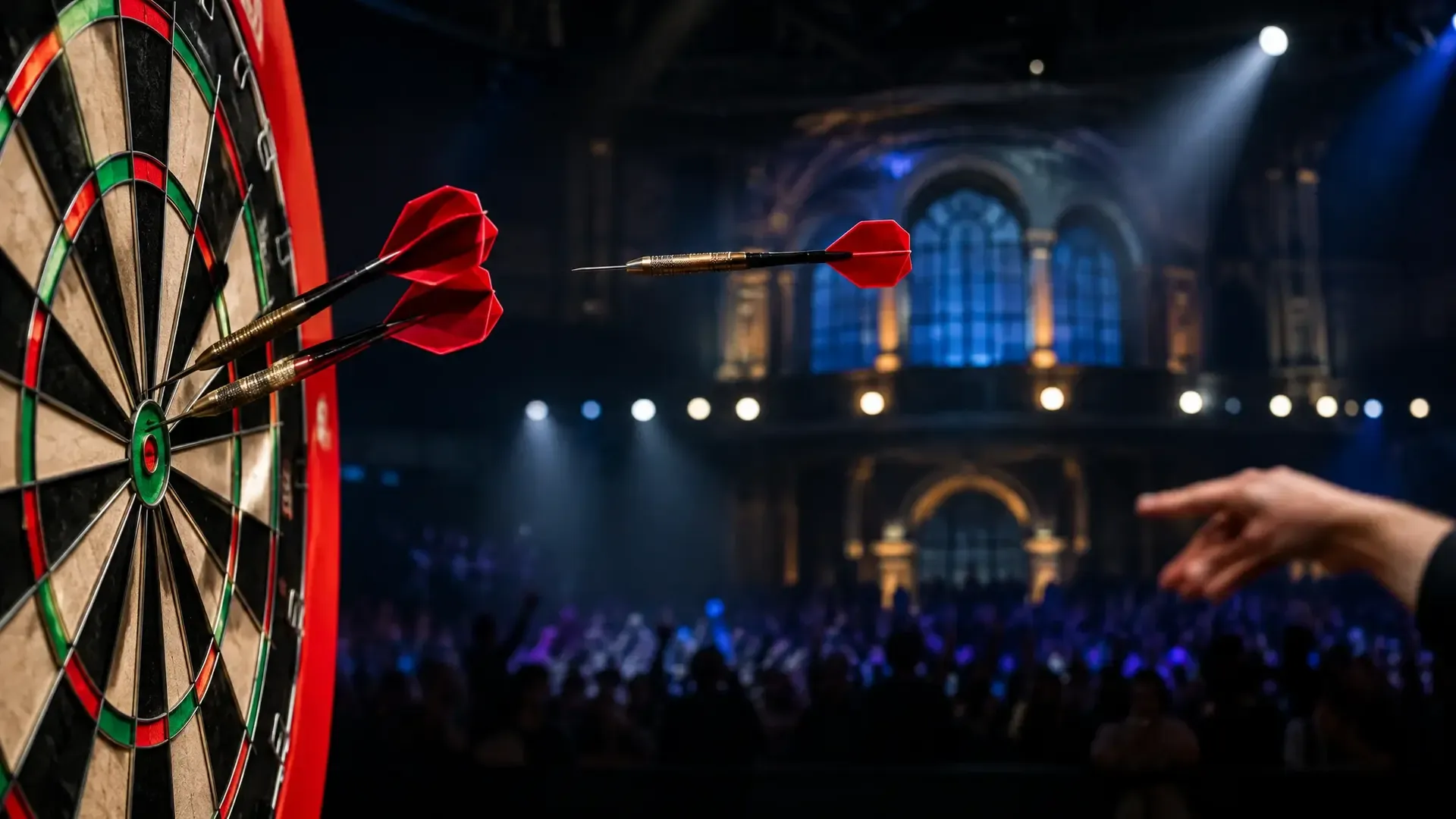
A History of the PDC World Darts Championship and Alexandra Palace
The PDC World Darts Championship is the flagship event of the Professional Darts Corporation, but its history begins with a split in professional darts rather than with an established annual tradition. From a new championship staged at a London pub venue to a major winter event at Alexandra Palace, the tournament has developed alongside the organisation that created it.
That development is also a story about place. The championship’s move to Alexandra Palace in 2008 gave it a larger and more distinctive setting, while the building’s own Victorian history added a strong sense of occasion. Together, the competition and the venue became closely associated with the turn of the year in the sporting calendar.
How the PDC World Championship began
The organisation now known as the PDC was formed in 1992, when a group of leading professional players broke away from the British Darts Organisation. It was initially called the World Darts Council, or WDC. The new organisation sought to develop its own professional circuit and major events, including a separate world championship.
The first championship organised by the WDC was held in 1994. It took place at the Circus Tavern in Purfleet, Essex, and Phil Taylor became the inaugural champion. At this stage, the event was a new rival championship rather than the continuation of the BDO World Professional Darts Championship. Keeping that distinction clear matters: the PDC championship has its own origin, records and institutional history.
The WDC changed its name to the Professional Darts Corporation in 1997. The name of the championship subsequently became associated with the PDC, although sponsorship agreements also affected the title used in particular periods. The organisation, the championship and the venue were separate parts of the story, even when fans commonly referred to the event by a shorter name.
From a breakaway event to a major championship
In its early years, the PDC World Championship was built around a relatively compact field of established professionals. As the PDC tour expanded, so did the championship’s reach. Qualification pathways gradually allowed more players to earn places through performances on the professional circuit, regional competitions and other recognised routes, rather than relying only on a small group of invited names.
The field grew over successive eras, and the tournament became a larger test of depth as well as elite quality. This was important for the championship’s identity. It was no longer simply a contest between familiar stars; it increasingly connected the top level of the sport with players emerging through the wider PDC system.
The match structure also developed. PDC World Championship matches are played in sets made up of legs, with the length and required stages increasing as players progress through the draw. Early-round matches are shorter than later contests, while the final is designed as the ultimate endurance test. Readers new to the event may find a separate darts rules and scoring explanation useful before comparing different eras.
Changes to the calendar and presentation helped the tournament reach beyond its original audience. A championship played across December and January has a natural annual rhythm: qualifying and early matches lead into the festive period, before the later rounds complete the event in the new year. The schedule made the tournament easy to recognise as a recurring part of winter sport, while television coverage and a growing live audience strengthened its cultural profile.
Why Alexandra Palace became part of the story
Alexandra Palace is a historic public venue in north London, commonly known as “Ally Pally”. It opened in 1873 as a Victorian centre for recreation, entertainment and public events. The building was destroyed by fire shortly after its opening, rebuilt and reopened in 1875, and has continued to serve changing public and cultural uses across its long history.
Its heritage gave the World Championship a setting with more character than a conventional modern arena. Alexandra Palace combines a prominent hilltop location, large event spaces and a building whose architecture carries visible links to London’s Victorian past. The venue’s rooms and circulation areas also allow the tournament to feel like a complete event rather than only a stage viewed from a single bank of seats.
The PDC World Championship moved from the Circus Tavern to Alexandra Palace for the 2008 edition. This was a significant practical and symbolic change. A larger, better-known London venue could support the championship’s expanding audience and ambitions, while retaining the close connection between darts, live spectators and a distinctive room. The move did not create the tournament’s identity on its own, but it gave that identity a more recognisable home.
At Alexandra Palace, the competition is staged around a central playing area with the audience close to the action. The sound, lighting and crowd response are important parts of the live experience, yet the building remains visible in the background of the occasion. That combination helps explain why the venue is more than a backdrop: its scale supports a major championship, while its history gives the event a setting that feels different from a standard sports hall.
A selective timeline of the championship
- 1992: The World Darts Council is formed by professionals who leave the existing governing structure.
- 1994: The first WDC World Championship is held at the Circus Tavern, with Phil Taylor winning the inaugural title.
- 1997: The World Darts Council adopts the name Professional Darts Corporation.
- 1990s and 2000s: The championship grows through a broader professional circuit, expanding fields and developing qualification routes.
- 2008: The World Championship begins its Alexandra Palace chapter after its years at the Circus Tavern.
- Today’s established tradition: The tournament’s December-to-January staging, enlarged field and major live presentation make it a defining annual event in professional darts.
How the venue changed the tournament’s identity
Alexandra Palace helped the championship appear both grander and more accessible. Its London setting connected the event with a well-known landmark, while the live format preserved the directness that has always been central to darts. The result was a competition capable of presenting high-level sport without losing the communal energy of a crowd gathered around a board.
The tournament’s evolution can also be seen in the different skills it asks of players. Success requires precision, tactical management of legs and sets, and the ability to sustain concentration across a long competition. For readers exploring the equipment side of the sport, an introduction to choosing darts offers useful background; for the finishing phase of a leg, a darts checkouts guide explains why closing combinations matter so much.
Most importantly, the championship and Alexandra Palace have developed together. The PDC created and expanded the competition, while Alexandra Palace gave its modern era a stable visual and cultural reference point. Annual staging at the venue turned the event into something audiences could anticipate each winter, not merely a final on a results page.
Sources and further reading
This history should be checked against the Professional Darts Corporation’s official tournament archive and historical records, alongside Alexandra Palace’s official history and event information. Established darts archives and reputable sports reporting can provide useful corroboration for changes to fields, qualification systems and scheduling. Venue terminology and building history should be taken from Alexandra Palace’s own published account, while championship dates and competition records should be checked against PDC records.
The enduring story is therefore not just one of winners and finals. It is the story of a professional organisation establishing a new championship, gradually widening its competitive structure, and finding a landmark venue that could carry the event into a new phase. At Alexandra Palace, the PDC World Darts Championship became an annual sporting occasion with its own setting, season and unmistakable place in darts culture.